
INSIDE THE FAILURE | CASE STUDY
Repeated Pump Shaft Failures: Finding the Cause Behind the Breakage
By Preston | Southeast Pump Specialists
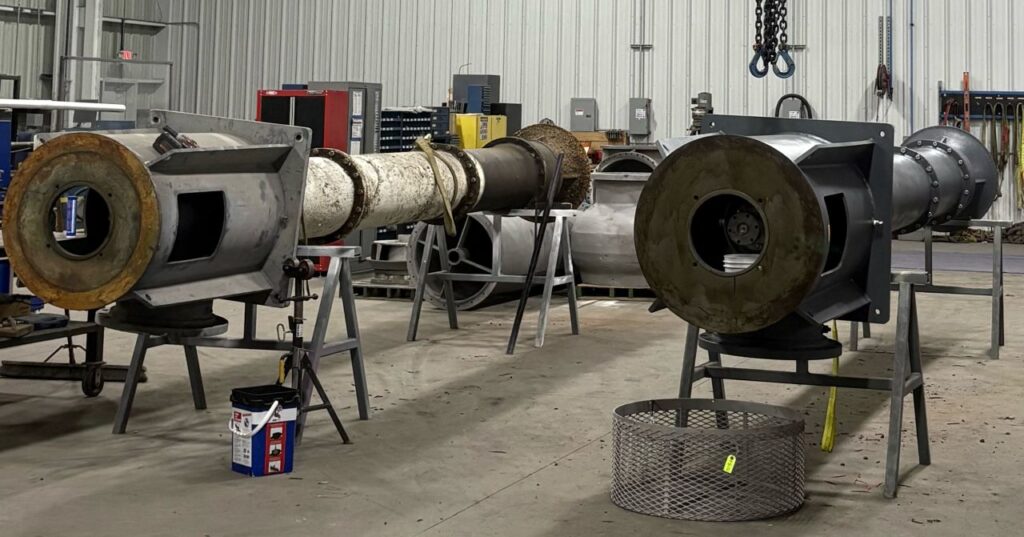
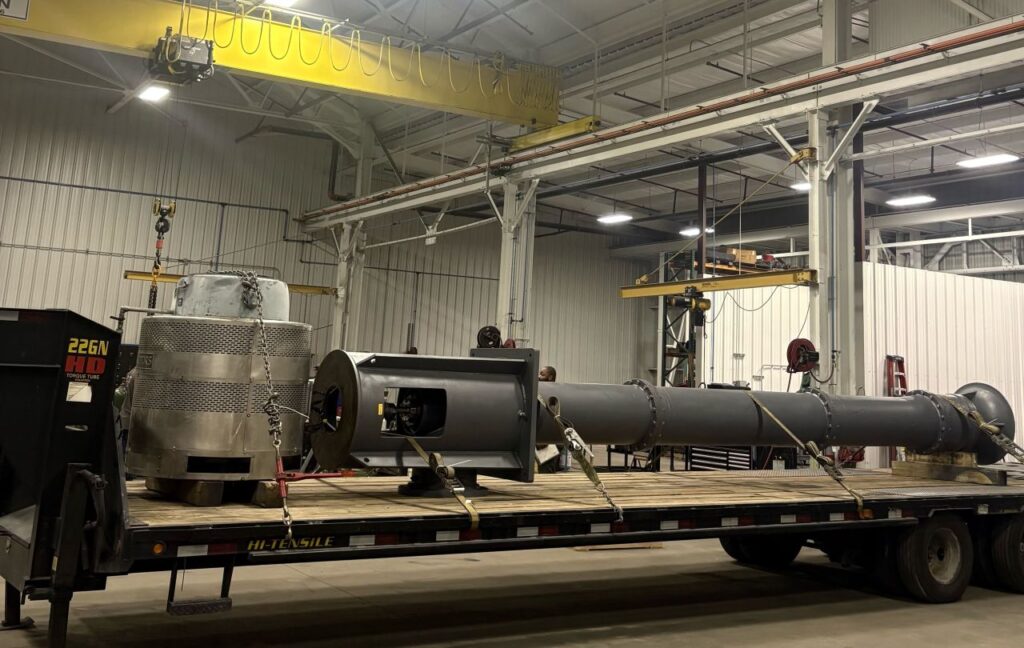
When a pump shaft breaks repeatedly, replacing the damaged component may leave the underlying problem unresolved. In this case, the investigation led Southeast Pump Specialists to what was happening inside the pumps while they sat idle. The interaction between chlorine exposure and the original shaft and bearing materials was creating conditions that caused the shafts to break on restart.
Understanding that sequence changed the repair approach.
The problem: pump shafts kept breaking
The pumps were experiencing repeated shaft failures. Each broken shaft was a visible sign of a problem, but the breakage alone did not explain why the failures kept happening. The investigation needed to look beyond the damaged components and consider their operating environment, including the time the pumps spent out of operation.
That idle period proved central to understanding the failure.
What the team found inside the pumps
Southeast Pump Specialists inspected the pumps and worked with the customer to understand the process fluid. Together, those findings pointed to a material compatibility issue. The original 416 stainless steel shafts and bronze bearings were unsuitable for the chlorine concentration in the process fluid. During stop-and-start operation, severe oxidation developed, creating interference between the bearings and shafts while the pumps sat idle.
Plain bearings need clearance around the rotating shaft to maintain a lubricating film. The oxidation reduced that clearance and restricted the shafts’ ability to turn freely.
When the pumps restarted, the shafts snapped against that restriction. The breakage appeared at startup, but the conditions causing it had developed while the pumps were idle.
What changed: shaft and bearing materials
To address the material compatibility issue, the team upgraded the shafts to 316 stainless steel and chose a chemically inert bearing material.
Original components
- Shafts: 416 stainless steel
- Bearings: Bronze
Updated components
- Shafts: 316 stainless steel
- Bearings: Chemically inert material
What this case teaches about recurring pump failures
A broken component shows where a failure occurred. Understanding why it occurred requires looking at the conditions around it. In this case, chlorine exposure, component materials, and idle time all mattered. Looking only at the broken shafts would have missed the sequence that led to their failure.
For operators dealing with recurring pump problems, the practical lesson is to examine the full operating cycle. What happens while equipment is stopped can be just as relevant as what happens while it is running. Material selection also needs to reflect the specific application. Identifying a component as “stainless steel” does not establish whether its particular grade is suitable for the service.
Discuss a recurring pump
problem with our team
If your pumps continue to experience the same failure, a closer investigation can help identify what is driving it.
Contact Southeast Pump Specialists to discuss your equipment, operating conditions, and repair needs